
Urban Deliveries - Where expectations are met, missed, or publicly reviewed

Updated: Jul 8
Urban deliveries are not a “logistics problem”.
They’re a brand problem.
Every missed ETA, blocked loading zone, angry neighbour, and parking ticket happens right where customers can see it. On their street. In their building. On their phone.
In dense cities, the last mile isn’t the last mile. It’s the most expensive, most regulated, most visible metre of your supply chain.
Run it well and you turn chaos into a competitive advantage.
Run it badly and you bleed margin one failed drop at a time.
Let’s talk about why urban delivery is so hard, why it’s getting harder, and how the operators who win are redesigning the system instead of yelling at drivers.
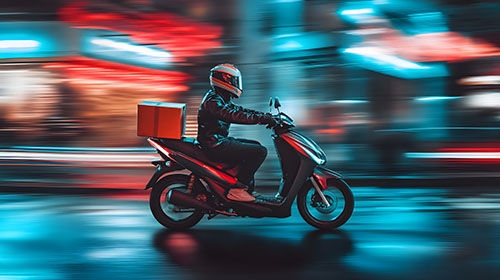
Why Urban Delivery Is the Hardest Mile in Commerce
Ecommerce keeps growing.
Cities keep densifying.
Regulators keep tightening the screws.
That combination turns the urban last mile into a pressure cooker.
Research on urban freight consistently shows that city deliveries cost more per drop, generate higher emissions per parcel, and suffer from lower first-attempt success rates than suburban or rural routes.
Why? Because cities fight back.
The Urban Reality Check
In cities, the last mile is:
The most expensive segment of the delivery journey
The most operationally unpredictable
The part customers judge you on hardest
You can’t “average your way” out of that.
The Real Problems Killing Urban Delivery Performance
1. Traffic That Eats Productivity for Breakfast
Urban routes are a minefield:
Peak-hour congestion
Roadworks that appear overnight
Accidents, events, school zones, pop-up bike lanes
Drivers spend less time delivering and more time staring at brake lights. That destroys stop density and inflates cost per drop.
Unpredictable travel times also make narrow delivery windows risky. Miss one stop and the whole route dominoes.
2. Parking, Kerb Space, and the Fine Economy
Kerb space is now prime real estate.
Drivers:
Circle blocks hunting for legal parking
Walk long distances from van to door
Risk fines just to keep routes moving
In some major cities, parking tickets and access violations are no longer “noise”. They are a measurable P&L line item.
That’s not a driver discipline issue. That’s a system design issue.
3. Buildings That Actively Hate Deliveries
Cities are full of:
Confusing numbering
Mixed-use developments
Security desks, access codes, broken intercoms
Apartment blocks with one tiny loading zone for 200 units
Every minute lost finding the right door increases service time, reduces stops per hour, and raises the odds of failed delivery.
Failed deliveries are margin kryptonite.
4. Regulations That Shrink Your Options
Cities are done asking nicely.
More and more urban centres are introducing:
Low- and zero-emission zones
Vehicle restrictions by size or engine type
Time-of-day delivery limits
Compliance forces carriers to rethink fleets, routes, and schedules.
Ignore it and you lose access. Or pay for it. Or both.
How High-Performing Operators Actually Fix Urban Delivery
This is where theory ends and design begins.
1. Real-Time Route Optimisation, Not Static “Best Guess” Routes
Cities change by the hour. Static routes die young.
Modern delivery tech uses:
Live traffic data
Service time by stop type
Time windows and vehicle restrictions
Routes are re-sequenced in real time. ETAs update automatically. Drivers stop improvising and start executing.
At scale, this cuts kilometres per stop and lifts on-time performance materially.
2. Micro-Fulfilment and Urban Hubs Beat Long Van Runs
The fastest way to fix urban delivery is to stop starting so far away.
Micro-fulfilment centres and urban depots:
Shorten route distances
Support bikes, walkers, and electric vehicles
Increase stops per hour in dense zones
Urban consolidation centres let multiple shippers share inbound freight and break bulk closer to customers. Fewer trucks in. More efficient last mile out.
Pilots across Europe and Asia consistently show reductions in inner-city van kilometres, congestion, and emissions when micro-hubs are done properly.
3. Vans Aren’t Always the Right Tool
In dense cities, vans are often the slowest option.
Cargo bikes and e-bikes:
Use cycle lanes
Access pedestrian zones
Park closer to entrances
In ultra-dense areas, bikes can outperform vans on stops per hour and cost per drop.
Electric vans and scooters also unlock access to low-emission zones and future-proof fleets against regulation.
This is not about being green for PR. It’s about being allowed to operate.
4. Lockers, PUDO, and Building-Level Solutions
Not every parcel needs a front-door handshake.
Parcel lockers and pick-up/drop-off points:
Cluster deliveries
Reduce failed attempts
Increase stop density
In-building lockers and concierge drop zones eliminate “not home” failures and re-delivery loops.
When adoption is high, these systems shorten routes, cut emissions, and lift first-attempt success rates dramatically.
5. Stop Fighting Cities. Start Working With Them.
Urban logistics works better when it’s collaborative.
Winning operators:
Partner with city planners on kerb management
Use off-peak or night delivery where permitted
Secure dedicated loading zones
Share micro-depot infrastructure
Cities that trial smarter kerbside rules and shared hubs consistently see lower congestion without strangling commerce.

What Is Last-Mile Delivery and Why Is It So Expensive in Cities?
Last-mile delivery is the final leg from a local hub or depot to the customer’s door, locker, or pick-up point.
In cities, it’s expensive because:
Drops are fragmented
Travel and service times are unpredictable
Failed deliveries multiply cost
Compliance adds friction
That’s why investment is flowing into lockers, PUDO networks, alternative vehicles, and automation.
If you want a deeper breakdown, we’ve covered it here: Last-Mile Delivery.
What’s Coming Next in Urban Delivery
Autonomous and Robotic Delivery
Robots and autonomous vehicles are being tested for:
Off-peak routes
Controlled districts
Hub-and-spoke models
They’re not replacing drivers tomorrow, but they’re reshaping cost models in specific environments.
Smart-City Integration
Cities are beginning to integrate freight data into traffic systems.
This enables:
Dynamic loading zones
Better kerb utilisation
Smarter congestion management
Urban delivery is slowly becoming part of city infrastructure, not an afterthought.
Sustainability Moves From Optional to Mandatory
Electric fleets, cargo bikes, and low-emission zones are becoming standard in major cities worldwide.
Operators also reduce emissions by:
Cutting failed deliveries
Consolidating drops
Optimising packaging and returns
Efficiency and sustainability are now the same conversation.
Practical Moves You Can Make Without Rebuilding Everything
You don’t need to burn your network down.
Start here:
Implement city-aware route optimisation tech
Pilot a micro-hub in one dense city
Shift part of your volume to bikes or lockers
Work with building managers on access solutions
Offer flexible delivery promises that support consolidation
Track what matters:
Cost per stop
Stops per hour
First-attempt success rate
Fines per 1,000 deliveries
Emissions per order
Then iterate.
Want to stop urban deliveries becoming a five-star public flogging?
If city deliveries are where your customer experience keeps getting mugged by traffic, failed first attempts and “where is my order?” emails, start with Why Last Mile Delivery Logistics Is So Important, then dig into What Is Last Mile Delivery and How Does It Work? for the basics behind the most expensive leg of the journey.
For the operational bits that make urban freight behave less like a scooter in a thunderstorm, read Solve Delivery Challenges Effectively and Transportation Management Explained: Strategy, Cost & Control.
And if the answer is getting inventory closer to customers instead of asking drivers to perform daily miracles, Hyperlocal Warehousing: Future of Fast Last Mile Delivery pairs neatly with Improve Supply Chain Efficiency & Cut Costs Without Chaos.
THE BRAINS BEHIND THE JOURNEY.
LOCAL CHAOS. GLOBAL CONTROL.
Urban Deliveries - Where expectations are met, missed, or publicly reviewed FAQs
What is urban last-mile delivery?
Urban last-mile delivery is the final stage of getting a parcel from a local hub or depot to the customer in a city environment. It’s the most visible part of logistics and usually the most expensive, because dense traffic, limited parking, apartment access, and failed deliveries all stack time and cost onto every drop.
Why is last-mile delivery more expensive in cities?
Because cities are designed for people, not vans. Congestion, curbside competition, fines, building access issues, and unpredictable service times all reduce stops per hour. Fewer stops, more delays, and more re-attempts mean higher cost per parcel compared to suburban or rural delivery.
How can ecommerce businesses reduce urban delivery costs?
The biggest savings usually come from design, not discounts. That means bringing inventory closer to customers with urban hubs, using route optimisation tech, shifting volume to cargo bikes or lockers where it makes sense, and tightening delivery promises so routes can actually be built efficiently.
Do cargo bikes and micro-hubs really work for urban deliveries?
Yes, in the right areas. In dense city centres, cargo bikes and walking couriers can outperform vans by parking closer, avoiding congestion, and completing more stops per hour. When paired with micro-fulfilment hubs, they can reduce both delivery cost and emissions without killing service levels.
What role do parcel lockers and pick-up points play in cities?
Lockers and pick-up/drop-off points increase stop density and reduce failed deliveries. Instead of one parcel per address, you deliver dozens to one secure location. That shortens routes, cuts re-delivery loops, and gives customers flexibility without blowing out delivery costs.
How do city regulations affect last-mile delivery?
Urban regulations now shape delivery economics. Low-emission zones, restricted delivery windows, vehicle limits, and access permits all influence which vehicles you can use and when. Carriers that don’t adapt end up paying in fines, delays, or lost access to key areas.
What KPIs should businesses track for urban delivery performance?
Forget vanity metrics. The ones that matter in cities are cost per stop, stops per hour, first-attempt delivery success rate, fines per 1,000 deliveries, and on-time performance by zone. If you don’t measure those, you’re guessing while your margin quietly leaks.
Is urban delivery becoming a competitive advantage?
Absolutely. Customers don’t see your linehaul contracts or warehouse processes. They see whether their order arrived on time, intact, and without drama. Brands that master urban delivery win repeat orders and loyalty without racing to the bottom on price.
From Urban Chaos to Last-Mile Discipline
Urban delivery is not getting easier.But it is getting designable.
The operators who win will:
Bring inventory closer
Mix modes intelligently
Share infrastructure
Use data to make every stop earn its keep
If your urban delivery operation feels like a daily fire drill, that’s not a people problem.
It’s a design problem.
And design problems are exactly the kind that Transport Works exists to fix.
Always Delivering. Even on streets that hate you.
Insights from Danyul Gleeson, Founder & Logistics Chaos Tamer-in-Chief at Transport Works
Danyul has been in the trenches - warehouses where pick paths were sketched on pizza boxes and boardrooms where the “supply chain strategy” was a shrug. He built Transport Works to flip that script: a 4PL that turns broken systems into competitive advantage. His mission? Always Delivering - without the chaos.
Sources & References
Urban Last-Mile Cost, Congestion & Complexity
World Economic Forum The Future of the Last-Mile Ecosystem Covers cost drivers, congestion, emissions, and the growing pressure on urban delivery networks.
OECD Urban Freight Transport and City Logistics Research on congestion, kerbside competition, and inefficiencies in dense cities.
McKinsey & Company The Last-Mile Delivery Challenge Quantifies why the last mile can account for over 50% of total delivery cost in urban areas.
Failed Deliveries, Customer Experience & Cost Impact
Capgemini Research Institute Last-Mile Delivery: The Future of Fulfilment Data on failed delivery rates, customer expectations, and cost per drop.
ParcelLab Post-Purchase Experience Reports Insights into customer anxiety, missed deliveries, and the CX impact of last-mile performance.
Deloitte The Future of Last-Mile Delivery Explores customer expectations, narrow delivery windows, and operational trade-offs.
Urban Micro-Fulfilment, Micro-Hubs & Consolidation
European Commission Urban Consolidation Centres and City Logistics Case studies showing reduced congestion and emissions through shared urban hubs.
Transport for London Retiming Deliveries & Urban Freight Trials Evidence on off-peak delivery, consolidation, and kerbside optimisation in dense cities.
MIT Center for Transportation & Logistics Research on urban distribution networks, micro-fulfilment, and delivery density economics.
Alternative Delivery Modes: Cargo Bikes, EVs & Lockers
International Transport Forum Urban Freight and the Role of Cargo Bikes Demonstrates how cargo bikes can outperform vans in dense city centres.
UPS Urban Sustainability and Cargo Bike Trials Real-world data from European city pilots showing productivity and emissions benefits.
DHL City Logistics & Green Last Mile Includes findings on parcel lockers, micro-depots, and EV fleets.
Parcel Lockers, PUDO & Failed-Delivery Reduction
Accenture Reinventing the Last Mile Shows how lockers and pick-up points reduce failed deliveries and cost per parcel.
InPost Locker Network Impact Studies Data on stop density improvements and urban delivery efficiency.
Pitney Bowes Parcel Shipping Index Global analysis of last-mile cost trends and delivery performance.
Sustainability, Emissions & Regulation in Cities
European Environment Agency Urban Transport Emissions and Freigh tResearch on emissions intensity of last-mile deliveries in cities.
International Energy Agency Transport and Logistics Emissions Data supporting EV adoption and low-emission urban delivery strategies.
C40 Cities City case studies on zero-emission zones, freight regulation, and delivery access policies.
Technology, Route Optimisation & Visibility
Gartner Market Guides for Last-Mile Delivery & TMSCovers route optimisation, real-time visibility, and urban delivery tech stacks.
McKinsey & Company Digital Logistics and Advanced Analytics Quantifies efficiency gains from route optimisation, telematics, and real-time data.


