
“Where’s My Order?” - The Most Expensive Sentence in Ecommerce Logistics
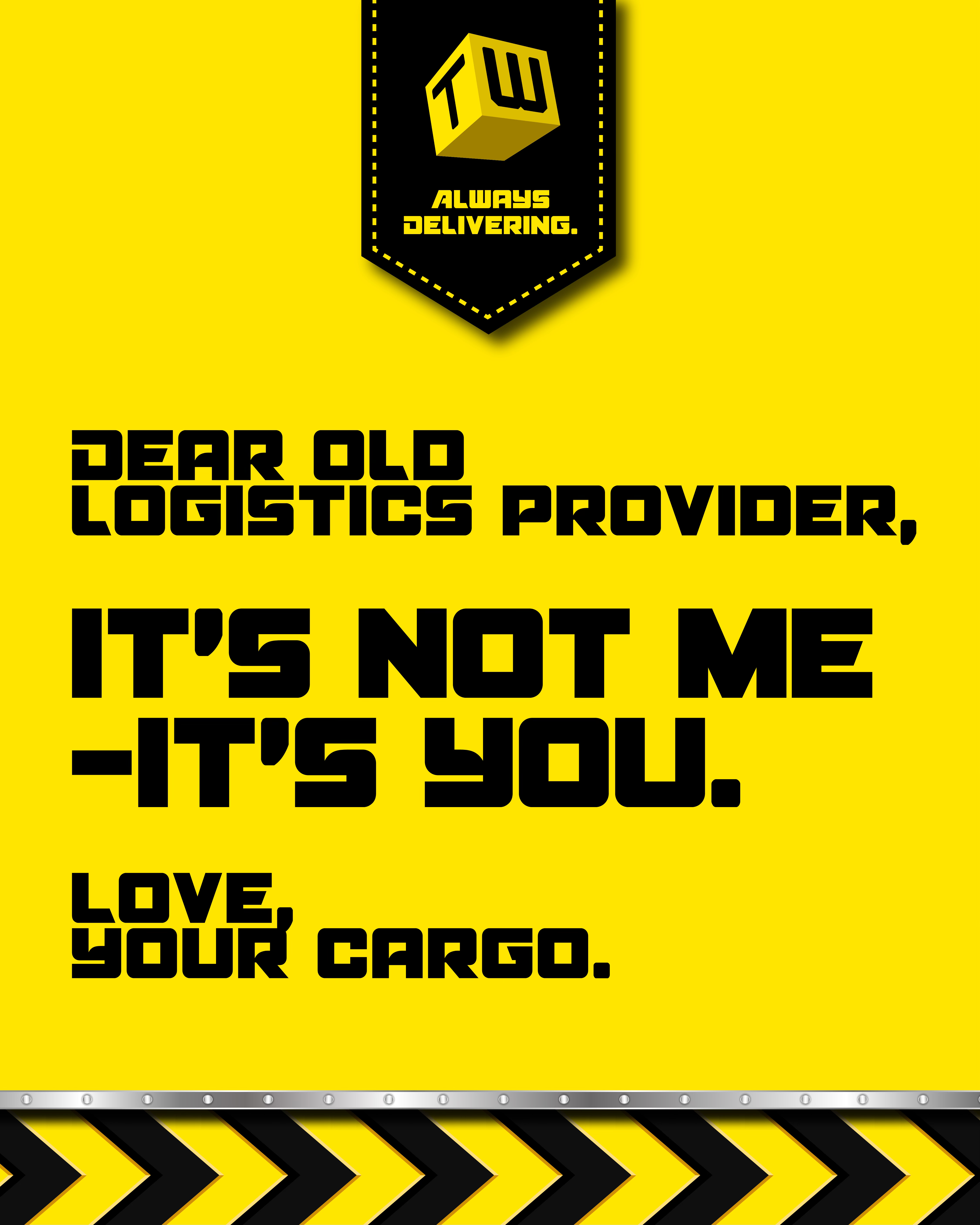
Updated: Jul 8
Because what happens right before and after the sale is what makes or breaks the brand.
If you’ve ever winced at a customer support ticket that starts with “Where’s my order?” – congrats. You’ve just come face-to-face with the five-word funeral that's silently draining your revenue, reputation, and team morale.
This isn’t just an innocent question.
It’s a neon-red smoke signal from the frontline of your customer experience.It’s someone who wanted to love you - who clicked, paid, hoped… and now feels duped.
Because when a customer has to ask “Where’s my order?”, they’re not just curious.
They’re anxious. Irritated. Suspicious. And that support ticket? It’s not the start of the problem. It’s the fallout.
That one question silently siphons your revenue, your reputation, and your ops team’s will to live - every single time it appears.
And here’s the kicker:
It’s usually not your product that’s the problem. It’s what happens (or doesn’t happen) between checkout and doorstep.
Maybe the tracking’s useless.
Maybe the 3PL is MIA.
Maybe the comms are vague, generic, or flat-out nonexistent.
Whatever it is, it breaks the golden ecommerce rule: Keep the customer in the loop, or risk losing them forever.
“Where’s my order?” is the final warning. Ignore it, and you’re not just bleeding one sale -You’re bleeding future sales, 5-star reviews, LTV, and the trust it took you years to build.
And if it’s happening regularly? Your brand isn’t scaling - it’s hemorrhaging. Quietly. Expensively. And publicly.
“Where’s My Order?” - The $5 Phrase That Costs You Thousands
Here’s the reality: Every WISMO ticket costs you.
Time (support teams chasing couriers)
Money (refunds, replacements, free shipping bribes)
Reputation (bad reviews, lost loyalty, churn)
Scalability (you’re building a castle on a swamp)
According to Metapack’s 2023 Delivery Benchmark:
85% of customers say the delivery experience defines the brand more than the product itself.
Translation? You could be selling unicorns and still get dunked in the reviews if your package arrives late, damaged, or without a single tracking update since 2003.

Why It Happens: The Real Reason Behind WISMO Overload
It’s not just late deliveries. It’s what happens when your logistics strategy is duct-taped together with blind faith and wishful thinking. Let’s break it down:
The Culprit | The Fallout |
Slow or no tracking updates | Customer panic, trust nosedives, and your support team turns into part-time therapists |
Vague or missing fulfilment comms | Customers assume you’ve lost their order or scammed them - they’re not wrong |
Stockouts post-checkout | “I paid for what?” emails and refund requests galore |
Shoddy 3PLs with no accountability | You’re in the dark right along with your customers |
Delivery delays with zero heads-up | Rage, 1-star reviews, and revenge tweets at 2AM |
1. Ghost Tracking
No tracking email? Delayed update? Courier blackhole?
Your customer goes from “excited” to “suspicious” faster than a discount code at checkout.
Fix it:
Send proactive tracking updates (including delays)
Use branded tracking pages that look like your brand, not the courier’s 2009 interface
Automate SMS/email updates during each leg of the journey
2. One Delivery Option Doesn’t Fit All
If you only offer “Standard Shipping (3-7 biz days)” at checkout, congratulations - you just lost everyone who shops like it’s already their mum’s birthday dinner tonight.
Fix it:
Offer multiple delivery options (express, standard, click & collect, carbon-neutral)
Show real-time carrier ETAs
Be transparent about cut-offs and fulfilment windows
3. Invisible Fulfilment = Frustrated Ops
Your WMS doesn’t talk to your TMS. Your 3PL won’t pick up the phone. And your team is manually updating spreadsheets like it’s 1997.
Fix it:
Switch to a unified 4PL model with real-time dashboard visibility
Integrate your ecommerce platform, inventory, and carrier data
Track pick accuracy and warehouse dwell time like a hawk
4. Fulfilment Errors That Snowball
Mismatched SKUs. Damaged packaging. A box of size 12 heels instead of dog food.
One fulfilment error = One refund + One churned customer + One “Don’t order from them” Tweet
Fix it:
Implement pick-to-light or barcode scanning validation
Track return reasons by SKU and packing team
Incentivise fulfilment accuracy like it’s gold (because it is)
5. Poor Post-Purchase Comms
Silence isn’t golden. It’s expensive.
If your post-checkout email is just “Thanks, here’s your receipt,” you’ve lost the moment to build trust, set expectations, and pre-answer nervous questions.
Fix it:
Send a sequence of post-purchase emails:
Order confirmation
Packing in progress
Out for delivery (with ETA)
Delivered
“How did we do?” feedback request
Use this to build brand loyalty and reduce tickets.
“Where’s My Order?” - The Most Expensive Sentence in Ecommerce Logistics
What It Actually Costs You
Let’s run some numbers.
If just 5% of your orders trigger WISMO tickets, and each one costs:
10 mins of support time ($8 average cost)
$15 in refunds/replacements
A potential $50 customer LTV drop
You’re losing $73+ per incident.
Multiply that by your monthly order volume and… yeah. That’s a new hire. Or three.
Now imagine if it’s 10%. Or more during peak.
📦 Let’s get real - WISMO is rarely caused by one big catastrophic failure. It’s death by a thousand little "oopsies."
Real Impact: What Happens When You Fix It
Brands that fix their WISMO pipeline see:
60% drop in support tickets (Shopify Plus Case Studies)
11% reduction in return rate from improved accuracy and comms
25% increase in repeat orders when post-purchase experience is dialled
At Transport Works, we’ve helped ecommerce brands across NZ, AUS, and the US:
Slash ticket volumes in half
Cut rework by up to 40%
Save $4,000+/month in fulfilment waste
See how here: Real brand wins →
The Fix: Always Delivering Isn’t Just a Tagline
Your logistics strategy isn’t just about getting the box out the door.
It’s your brand in motion.
Every “Where’s my order?” email isn’t just a problem. It’s a symptom of a broken system.
And that’s where Transport Works comes in.
We’re not a courier. We’re not a warehouse. We’re your chaos command centre - a strategic 4PL partner that plugs into your tech stack, optimises your processes, and gives your customers a delivery experience worth staying loyal to.
Want to stop bleeding revenue post-checkout? Let’s fix the system behind the sale.
Want to make "Where's my order?" a question your customers never have to ask? Read:
How to Stop Losing Ecommerce Customers Between Checkout and Delivery
Last-Mile Delivery Logistics: Where Customer Experience Is Won or Lost
Solving Delivery Challenges Effectively Without Losing Your Mind or Your Customers
What to Do When Your 3PL Can't Keep Up With Your Ecommerce Business
Inside the Control Tower: How 4PLs Bring Tech, Visibility & Calm to the Chaos
THE BRAINS BEHIND BETTER ECOMMERCE VISIBILITY.
LOCAL CHAOS. GLOBAL CONTROL.
Ecommerce Logistics FAQs
“Where’s My Order?” – The Most Expensive Sentence in Ecommerce Logistics
How do ecommerce businesses optimize their supply chain for faster delivery times?
If you want to win the ecommerce race, speed matters. A whopping 41% of consumers expect two-day delivery, and 24% expect same-day delivery (PwC) - so, how do smart brands keep up?
✅ Regional warehousing & micro-fulfillment centers
Positioning inventory closer to customer hotspots slashes last-mile times. It’s why we help clients at Transport Works design zoned warehousing strategies that cut delivery times by up to 50%.
✅ Automated order processing & routing
Automation eliminates slow, error-prone manual workflows. Orders zip from cart to fulfillment faster than you can say “checkout.”
✅ Carrier diversification
Relying on one carrier = risky. Smart brands blend national carriers, regional partners, and even gig economy couriers to keep delivery promises tight.
✅ Demand forecasting
Stock what sells, where it sells. Big data and predictive analytics reduce shipping distance and speed up delivery.
💡 Pro tip: Faster delivery isn’t magic - it’s an intentional, tech-powered supply chain strategy. At Transport Works, we help businesses redesign their logistics playbook for speed and cost-efficiency.
👉 Ready to make “fast delivery” your secret weapon? Check out our Fulfillment Optimization Services.
What are the main challenges in managing inventory across multiple sales channels?
Managing inventory across a website, Amazon, eBay, TikTok Shop, and maybe even a brick-and-mortar store? Welcome to the ultimate juggling act - and one dropped ball can turn into a flood of refunds, bad reviews, and “where’s my order?” emails.
Here’s what makes it tricky:
✅ Real-time stock visibility
Without an integrated system, you’re running blind. 43% of small businesses either don’t track inventory or use manual methods (Wasp Barcode) - which is why overselling happens.
✅ Inventory accuracy
Different channels have different demands. What’s hot on one platform may not budge on another. Poorly allocated stock leads to shortages in one place and dead weight in another.
✅ Order sync and fulfillment speed
Multiple sales channels mean orders flood in from everywhere. Without smart automation, your team scrambles, slows down, or flat-out misses things.
💡 Pro tip: Use a centralized inventory management system (IMS) to sync product availability, automate updates, and connect warehouses. At Transport Works, we help brands stitch together their platforms, so no channel goes rogue.
Stat to know: Companies with integrated inventory systems improve order accuracy by 20-30% and reduce carrying costs by up to 25% (McKinsey).
How does order consolidation reduce fulfillment costs and improve customer satisfaction?
Think of order consolidation as carpooling for your products - fewer trips, less waste, more smiles (and yes, more savings).
✅ Reduced shipping costs
Consolidating multiple items into one shipment cuts down on boxes, packing materials, and carrier fees. According to DHL, consolidated shipments can reduce fulfillment costs by 15-25% - that’s serious margin magic.
✅ Eco-friendlier operations
Fewer shipments = lower carbon footprint. And customers notice: 68% of consumers say they’re more likely to buy from brands with sustainable practices (IBM).
✅ Better unboxing experience
Nothing ruins an order like three separate deliveries for one purchase. Consolidation means customers get everything they ordered, together, faster - and you avoid the dreaded “partial shipment” rage.
✅ Optimized warehouse workflow
Your warehouse team picks and packs smarter, not harder. At Transport Works, we help brands implement smart fulfillment rules to consolidate orders without delaying fast-moving SKUs.
💡 Pro tip: Consolidation isn’t “just hold everything till it’s ready” - it’s about smart timing and inventory placement. Done right, it boosts both profits and loyalty.
👉 Want to make order consolidation your secret CX weapon?
Why is third-party logistics (3PL) becoming more popular among ecommerce companies?
Short answer? Because doing everything yourself is a fast track to burnout, ballooning costs, and operational chaos. Let’s break it down:
✅ 3PL (Third-Party Logistics) = You outsource warehousing, fulfillment, and shipping to a logistics provider. You save time, tap into scale, and get expertise you don’t have in-house. No more late nights figuring out carrier contracts or how to fit 1,000 boxes into 500 square feet.
Stat check: 90% of Fortune 500 companies use 3PL services to reduce costs, increase flexibility, and improve delivery speed (Armstrong & Associates).
BUT... here’s where the magic really happens:
✅ 4PL (Fourth-Party Logistics) = You don’t just hand off part of the job - you hand off the whole orchestration.
A 4PL like Transport Works manages your 3PLs, your carriers, your warehouses, and your data. We coordinate everything behind the scenes, from strategy to execution.
Here’s why 4PL levels you up:
Single point of contactNo juggling multiple partners - we do it for you.
End-to-end optimizationWe don’t just ship boxes - we optimize your supply chain, spot inefficiencies, and turn chaos into flow.
Tech + brainsWe plug into your systems (or help build them) and layer in expert management - so you get visibility and velocity.
Scalability with less riskWith 4PL, you can scale into new markets, channels, or product lines without building a new ops team every time.
💡 Pro tip: Think of 3PL as hiring a contractor; think of 4PL as hiring the architect, project manager, and contractor in one. At Transport Works, we’re the 4PL that makes your logistics hum while you focus on growth.
👉 Want to know if you’re ready to graduate to 4PL? Check out our 4PL & End-to-End Logistics Services.
What strategies can ecommerce businesses use to improve picking accuracy and reduce returns?
Picking errors are the silent killers of ecommerce profits - and customers don’t care why they got the wrong item; they just want it fixed.
Here’s how smart brands boost accuracy and slash costly returns:
✅ Barcode scanning + WMS
Barcode systems linked to a Warehouse Management System (WMS) reduce human error. Studies show this combo can increase picking accuracy to 99.9% (Ware2Go). That’s the difference between happy unboxing videos and angry return labels.
✅ Zone picking + smart layout Organize your warehouse by product zones and assign pickers to specific areas. This cuts walking time, reduces mix-ups, and speeds up fulfillment.
✅ Employee training
Your pick-pack team is the heartbeat of your operation. Train them like pros, not temps - accuracy goes up, morale follows.
✅ Regular audits + feedback loops
Check for error patterns and share insights with the team. Mistakes are learning goldmines if you actually use them.
✅ Automation
Automated picking systems or robotics can seriously reduce error rates, especially in high-volume environments.
💡 Pro tip: At Transport Works, we help ecommerce brands set up the right mix of tech, process, and people to drive accuracy through the roof and keep returns to a minimum.
What specific methods do ecommerce companies use to streamline their supply chains?
If your supply chain feels like a tangled ball of stress, you’re not alone - but the best ecommerce brands know how to untangle the mess and turn it into a competitive edge.
Here’s how they do it:
✅ End-to-end integration
Connecting systems like your ecommerce platform, Warehouse Management System (WMS), Transportation Management System (TMS), and inventory tools creates one smooth data flow. Brands with end-to-end visibility reduce fulfillment errors by up to 67% (McKinsey).
✅ Supplier collaboration
Proactive communication and real-time data sharing with suppliers helps prevent delays, stockouts, and panic calls at midnight.
✅ Cross-docking
By skipping storage and sending inbound goods straight to outbound shipping, companies slash handling costs and cut fulfillment time. At Transport Works, we help brands implement cross-docking solutions that can reduce storage costs by up to 25%.
✅ Smart demand forecasting
Using big data and predictive analytics, brands align inventory levels with actual demand - no more “whoops, overstocked for summer” moments.
✅ Sustainability upgrades
Eco-conscious practices like route optimization, packaging reduction, and greener transport aren’t just good for the planet - they’re increasingly demanded by customers. 73% of global consumers say they’d change buying habits to reduce environmental impact (Nielsen).
💡 Pro tip: At Transport Works, we help you streamline your supply chain so it runs like a well-oiled (and well-tracked) machine - saving you time, money, and migraine pills.
👉 Want to transform your supply chain from clunky to cutting-edge? Check out our Supply Chain Optimization Services.
How can integrating sales channels help manage inventory more effectively?
Picture this: you’ve got Shopify, Amazon, eBay, maybe even TikTok Shop - and they’re all shouting orders at your warehouse like caffeinated toddlers. Without integration? Total chaos. With integration? Inventory harmony.
Here’s why smart ecommerce brands integrate their sales channels:
✅ Real-time inventory sync
No more overselling or underselling. Integrated systems update stock levels across all platforms automatically, so you don’t sell 500 units when you only have 50. According to Brightpearl, brands with real-time inventory sync see 60% fewer stockouts.
✅ Centralized order management
Instead of your team juggling dashboards, integration pulls orders into one hub - making it faster to process, pick, and ship.
✅ Better forecasting
When all your sales data flows into one place, you can see what’s selling where, plan smarter, and stock more strategically.
✅ Happier customers
Consistent product availability and faster fulfillment = fewer angry emails, better reviews, and more repeat business.
💡 Pro tip: At Transport Works, we help ecommerce businesses integrate their channels with inventory and fulfillment systems, turning messy multichannel operations into smooth, scalable machines.
👉 Want to stop the inventory chaos before it eats your margins? Check out our Sales Channel Integration Services.
In what ways does order consolidation impact delivery speed and customer loyalty?
Order consolidation is basically your supply chain’s version of “work smarter, not harder” - but get it wrong, and you risk turning eco-friendly into eternally delayed.
Here’s the impact:
✅ Faster for multi-item orders (if done right)
Smart consolidation combines multiple items into a single shipment without adding delays. According to Accenture, consolidated shipping can reduce delivery times by up to 25% when inventory is strategically positioned.
✅ Lower costs = happier customers
Fewer shipments mean lower costs, and that often translates into better (or free!) shipping options for customers - a big loyalty booster.
✅ Sustainability wins
Customers care about the planet: 73% of consumers say they’re more likely to buy from brands with sustainable practices (Nielsen). Consolidating shipments reduces packaging waste and emissions - without greenwashing.
✅ The loyalty factor
When you deliver everything together, on time, in fewer boxes, customers feel cared for. That emotional win turns into repeat purchases and positive reviews.
💡 Pro tip: At Transport Works, we help brands implement smart consolidation rules using fulfillment logic and regional warehousing - so you get the savings without sacrificing delivery speed.
👉 Want to master consolidation and win customer love? Check out our Fulfillment Optimization Services.
Why are more ecommerce businesses choosing third-party logistics providers now?
In short? Because trying to DIY your logistics today is like trying to row a container ship with a soup spoon.
Here’s why ecommerce brands are flocking to 3PLs (and 4PLs like Transport Works) right now:
✅ Explosion in order volume
With global ecommerce sales projected to hit $6.3 trillion by 2024 (Statista), brands can’t keep up with fulfillment using duct-tape systems and backroom staff. 3PLs offer instant scalability without the capital drain.
✅ Speed and expertise
3PLs bring optimized networks, advanced tech, and logistics pros who live for picking, packing, and shipping - so you can focus on your brand, not your warehouse.
✅ Cost efficiency
Shared warehousing, bulk shipping rates, and automation tools cut fulfillment costs by up to 20% (Armstrong & Associates) compared to DIY ops.
✅ Customer demands are brutal
We’re living in a world where 53% of consumers expect free two-day shipping (PwC). 3PLs help brands compete on speed and cost without burning out.
✅ Why 4PL is next-level
While 3PLs handle execution, a 4PL (like us at Transport Works) orchestrates the entire show - managing your 3PLs, optimizing your carrier mix, and giving you end-to-end visibility and strategy.
💡 Pro tip: Don’t just outsource blindly - partner smart. At Transport Works, we help ecommerce brands choose, manage, and optimize their logistics partners so they scale with control and confidence.
👉 Ready to join the logistics big leagues? Check out our Logistics Management Services.
What innovative techniques improve picking accuracy and minimize product returns?
Picking errors are the supply chain’s sneaky budget vampires - sucking cash, time, and customer trust. But with the right techniques, you can sharpen your accuracy and shrink those dreaded returns.
✅ Barcode scanning + WMS integration
Manual picking? Too 1995. Scanners linked to a Warehouse Management System (WMS) boost accuracy to 99.9%(Ware2Go) and drastically cut mispicks.
✅ Zone picking + pick-to-light systems
Break your warehouse into zones and guide pickers with digital “pick-to-light” displays. It’s like giving your team a GPS for every SKU - faster, less error-prone, and surprisingly fun.
✅ Automated fulfillment + robotics
For high-volume brands, automation isn’t sci-fi - it’s survival. Robotic picking systems improve speed and precision, especially during peak seasons.
✅ AI-powered quality controlAI can flag anomalies in orders, flagging potential mistakes before they leave the building. That’s fewer returns, refunds, and angry customer emails.
✅ Better training = better picking
Your human team matters. Brands that invest in picker training reduce error rates by up to 25% (McKinsey) - and boost morale while they’re at it.
💡 Pro tip: At Transport Works, we help ecommerce businesses design fulfillment operations that run like precision machines - blending tech, process, and people to minimize mistakes and maximize smiles.
👉 Want to cut returns and level up accuracy? Let's Chat
Don’t Let Logistics Be Your Weakest Link
Look - you don’t need a logistics partner who blames the courier and vanishes after dispatch. You need a 4PL that owns the customer experience from click to doorstep.
Transport Works builds branded post-purchase systems, offers real-time KPI reporting, and keeps your ops team out of firefighting mode.
📉 Rework? Down.
📈 Repeat orders? Up.
📬 Refunds? Reduced.
😵💫 WISMO madness? Solved.
Insights from Danyul Gleeson, Founder & Logistics Chaos Tamer-in-Chief at Transport Works
Danyul has been in the trenches - warehouses where pick paths were sketched on pizza boxes and boardrooms where the “supply chain strategy” was a shrug. He built Transport Works to flip that script: a 4PL that turns broken systems into competitive advantage. His mission? Always Delivering - without the chaos.
Sources and References
Metapack’s 2023 Delivery Benchmark where 85 percent of customers say the delivery experience defines the brand more than the product.
Shopify Plus Case Studies showing a 60 percent drop in support tickets after fixing WISMO issues.
PwC research indicating consumer delivery expectations (41 percent expect two-day delivery and 24 percent expect same-day delivery).
McKinsey data on companies with integrated inventory systems improving order accuracy by 20 to 30 percent and reducing carrying costs by up to 25 percent.
DHL analysis on how consolidated shipments can reduce fulfillment costs by 15 to 25 percent.
IBM consumer data that 68 percent or more buyers are more likely to purchase from brands with sustainable practices.
Statista projection that global ecommerce sales were on track to hit $6.3 trillion by 2024.
Armstrong & Associates statistic that 90 percent of Fortune 500 companies use 3PL services for cost efficiency, flexibility, and speed.
Ware2Go picking accuracy benchmark showing up to 99.9 percent accuracy with WMS and barcode integrations.


Comments